)-2.png)
How Building Strength and Mobility Together Helps Prevent Injuries
- Leah Bueno DOMP, COMT, MMP

- 3 days ago
- 3 min read
Why flexibility alone isn’t enough for dancers and artistic athletes
In dance and artistic sports, mobility is often treated as the goal. Higher extensions, deeper backbends, and increased flexibility are frequently associated with better technique and stronger performance. But one of the biggest misconceptions in dance training is that more range automatically means a healthier or more capable body.
In reality, mobility without strength is one of the most common contributors to injury.
At Performance Pilates and Rehab, we work with dancers and artistic athletes who are often extremely flexible, yet still dealing with pain, instability, recurring tightness, or injuries that keep returning. In many of these cases, the issue isn’t a lack of mobility. It’s a lack of support within that mobility.
Flexibility Alone Doesn’t Create Stability
The body is designed to protect itself. If a joint moves into a range that the surrounding muscles cannot properly support, the body begins compensating.
This can look like:
Gripping in the hip flexors or lower back
Rolling the feet to force turnout
Hanging into joints instead of using muscles
Feeling “tight” despite being very flexible
Many dancers assume these issues mean they need to stretch more, when in reality the body is often asking for more strength and control. The nervous system will always prioritize safety over flexibility.

Why Strength Matters for Injury Prevention
Strength training helps the body control movement instead of simply falling into it. When muscles are strong enough to support large ranges of motion, joints stay more stable and force is distributed more efficiently throughout the body.
This becomes especially important in dance because dancers regularly work in extreme positions:
Turnout
High extensions
Jumps and landings
Backbends
Deep flexibility skills
Without adequate strength, passive structures like ligaments, tendons, and joint capsules begin taking on too much stress.
Over time, this can contribute to:
Hip pain and instability
Achilles and foot injuries
Back discomfort
Hamstring strains
Recurrent overuse injuries
Strength acts as protection for mobility.
The Goal Is Controlled Mobility
True mobility is not just the ability to reach a position, it’s the ability to control that position safely.
This means:
Strength at end range
Stability during movement
Proper muscular engagement
Coordination through transitions
When dancers build mobility and strength together, they often notice:
More consistent technique
Better balance and control
Less pain and fatigue
Improved performance quality
The body stops fighting to stabilize itself and movement begins to feel more supported and efficient.

Why This Matters for Young and Hypermobile Dancers
This conversation is especially important for young dancers and naturally hypermobile dancers. Many flexible dancers are praised for their range early on, but flexibility without enough strength can make the body more vulnerable to overload and instability. These dancers often need more strength training — not more stretching.
Teaching dancers how to support their mobility early can make a major difference in:
Injury prevention
Technical consistency
Long-term joint health
Longevity in dance
A New Understanding of Mobility Training
Dance science has evolved significantly in recent years. We now understand that mobility training should not be separated from strength training.
That’s exactly why we created our upcoming workshop:
Building Bendy Bodies That Don’t Break
This workshop is designed for dance teachers and movement professionals who want to better understand:
How the body safely develops mobility
Why strength is essential for flexibility
How to train hypermobile dancers safely
What current dance science tells us about injury prevention and performance
Our goal is to help educators move beyond outdated “stretch more” approaches and toward training methods that support both performance and long-term health.
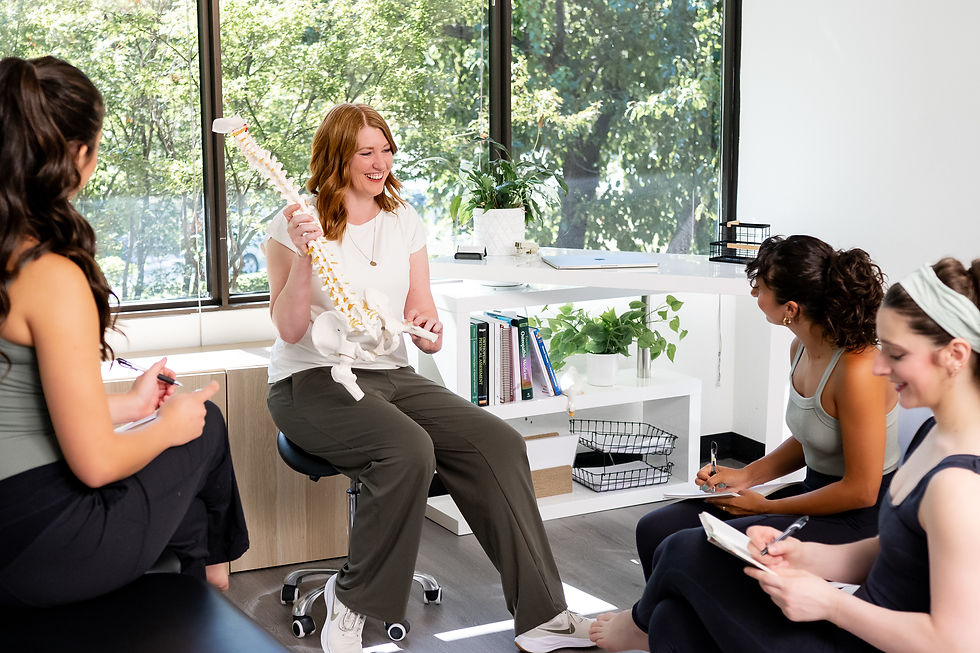
Workshop Information
Performance Pilates and Rehab730 Alhambra Blvd. Suite 222Sacramento, CA
May 30th 3:00–5:00 PM
30-minute Q&A
The Bigger Picture
The goal isn’t simply to create more flexible dancers. It’s to create dancers who are strong enough to support the movement they’re asking their bodies to perform. When mobility and strength are developed together, dancers don’t just move farther, they move better, safer, and with greater longevity.


Comments